Tampilkan postingan dengan label Summer of Satan. Tampilkan semua postingan

Jumat, 30 September 2011

SUMMER OF SATAN: post-retrospective analysis


Friends, readers and fellow countrymen of the blogosphere, the Summer of Satan has reached its end. Now comes the autumn of all things pumpkin-shaped and ghoulish, as a large swathe of next month is given over to 13 for Halloween, and after that it won’t be long till the second annual Winter of Discontent.

In other words, no need to mourn the passing of our Satanic summer: plenty more reels of cinematic depravity will be flickering through the projection booth window here at The Agitation of the Mind before 2011 draws to its close.

After the next Giallo Sunday offering (I’ve got a true one-off lined up), I’ll be taking a week away from the blog to work on some other projects. In the meantime, though, here’s a quick look back at the eighteen Faustian films considered in this most reprehensible of retrospectives.

I didn’t quite cover all of the films I wanted – Bryce recommended ‘Petey Wheatstraw: The Devil’s Son-in-Law’, but my usual go-to resources failed me and the budget, after the recent death of my oven and microwave and a repair job on the car, didn’t stretch to ordering the DVD as an import. Still, I sat through a melange of dark and nasty productions, the quality control of which varied to an almost schizophrenic degree.

Here’s a complete list of the films and the lessons I learned from them:

‘The Brotherhood of Satan’ – do not mock Ernest Borgnine’s jumpsuit. Just don’t.

‘The Devil’s Rain’ – even William Shatner’s unorthodox diction cannot defeat the powers of darkness.

‘Race with the Devil’ – for God’s sake, holidaymakers, use a travel-guide-approved RV park. Setting up shop down that dirt track near the creek where the Satanists are conducting their human sacrifice is a real quiet-getaway deal-breaker.

‘Asylum of Satan’ – great title, shame about the movie.

‘Hard Ride to Hell’ – see ‘Race with the Devil’. Fuck’s sake, RV-ers, do you like the pain this much?

‘The Devil Rides Out’ – Hammer + Dennis Wheatley = goooooood.

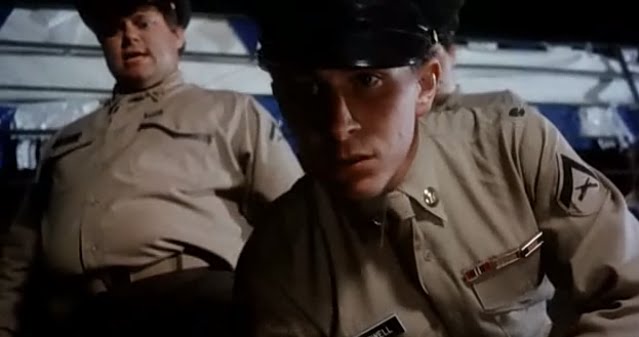
‘Evilspeak’ – in which a computer in the nineteen-motherfucking-eighties manages, without modem, internet dongle, software downloads or advanced programming, to translate Latin texts, compute the requirements for a Satanic ritual, and conjure the devil. Seriously, Windows 98, what the fuck?

‘The House of the Devil’ – the 70s redux. Horror how it used to be. Somebody give Ti West a few million dollars and final cut. Right freakin’ now.

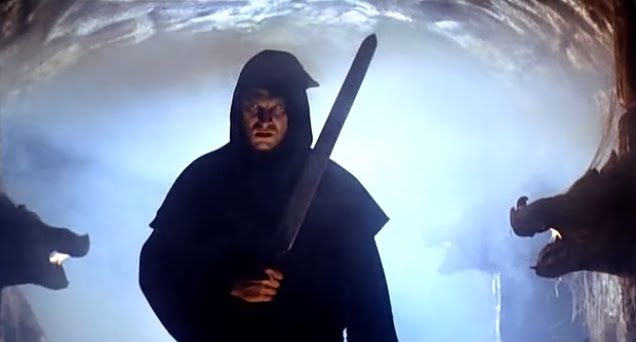
‘Lady Death’ – in which the devil’s daughter gets kitted out in a revealing little number that makes Vampirella’s costume look demure, avails herself of a bloody big sword, gets an army together and gives her old man what for. I’m down with this.

‘Messiah of Evil’ – the best ‘Twilight Zone’ episode never made.

‘Satan’s Children’ – in which the homophobic minions of the devil get their collective asses whupped by a nerd in white y-fronts. This is not a good advert for the Evil One.

‘Exorcismus: The Possession of Emma Evans’ – your priest uncle sucks cocks in hell. Oh shit, I think I might have given something away.

‘Damned in Venice’ – not the Dirk Bogarde one. Sooooo not the Dirk Bogarde one.

‘To the Devil – a Daughter’ – Hammer + Dennis Wheatley = baaaaaaad.

‘Antichrist’ – don’t fear the Reaper … fear Lars von Trier instead!

‘Alucarda’ – nuns, flagellation, vampirism, demonic possession, girl-girl shenanigans. ’Nuff said.

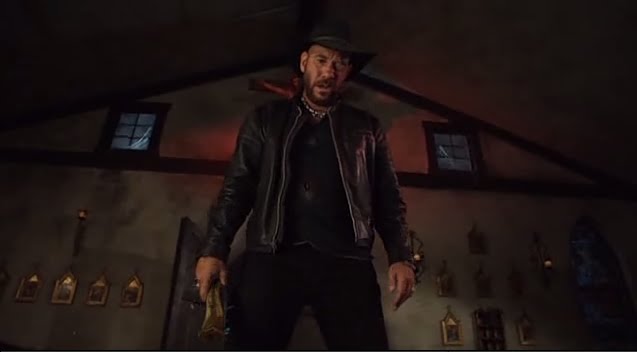
‘Drive Angry’ – in which the devil remains pretty much on the sidelines … but when the muscles cars are this cool, the chicks this tough and Ol’ Nick sends William fuckin’ Fichtner to do the job for him, who’s counting?

‘The Day of the Beast’ – El Bestia vs. a jumpy priest, a cerebrally-challenged heavy metal fan and an egomaniac TV presenter. Ladies and gentlemen, place your bets.

Kamis, 29 September 2011

SUMMER OF SATAN: The Day of the Beast


Alex de la Iglesia made an inventive if somewhat frenzied debut with the sci-fi satire ‘Accion Mutante’. Rough and ready and with its set-pieces belying its budget, nonetheless the talent behind the film was evident.

His follow-up, again a genre film and again satirical in tone (at least in its early stages), proved that de la Iglesia was a filmmaker with full confidence in the medium and a wicked sense of the irreverent. The genre this time was horror.

‘The Day of the Beast’ begins with mild-mannered and very nervous priest, Father Curo (Alex Angulo) consulting his superior. He has cracked a code hidden in an abstruse text and determined that the son of the devil is to be born on Christmas Eve – a date just days hence. He confesses that he is now about to leave the church and commence sinning like it’s going out of style. By sinning he will be able to broker a pact with Satan (price: his soul) and thus discover the location of the Adversary’s birth. And then, hopefully, prevent it.


Curo’s superior warns him that the Evil One will attempt to foil him at every turn. Curo turns to take his leave. A massive fresco of the cross detaches itself from the church wall and flattens Curo’s compadre. De la Iglesia stages it as pure slapstick, a comic-book start to the movie that’s underlined by the graphic novel style title credit, a crucifix, a shadow and the silhouetted figure of the devil featuring prominently in the design.

For maybe half an hour or so, de la Iglesia keeps things simmering away at this level: Curo, determined to become a great sinner, curses a dying man and lifts his wallet while he’s meant to be giving absolution; refuses to behave charitably to a beggar; steals someone’s luggage; and blunders into a record shop specializing in heavy metal in search of the devil’s music. Said establishment is managed by Jose Maria (Santiago Segura), whose crotchety mother runs the grubby boarding house at which Cura ends up.


As an unlikely friendship develops between priest and metalhead, the latter points the former in the direction of TV celebrity, supposed medium and 100% charlatan Cavan (Armando De Razza) as a possible candidate to expedite Curo’s contact with Beelzebub. Curo seizes on the idea far too eagerly and what ensues is a melange of home invasion, proto-torture porn (Curo’s exposition speech, punctuate with whacks of a golf club to the forcibly restrained Cavan’s kneecaps is considerably funnier than it has any right to be), slapstick comedy (events are interrupted by the arrival of Cavan’s buxom girlfriend – played by Maria Grazia Cucinotta, a woman with an hourglass figure and a décolletage like a photo-finish in a zeppelin race) and Satanic shenanigans.


The ritual Curo and Jose Maria compel Cavan to undertake (which, apparently, was a genuine Satanic ritual – now there’s a commitment to the Method) proves all too successful and Curo and co. flee the powers of darkness.

This is where ‘Day of the Beast’ changes gear and I don’t want to go into much more detail. If you’ve not seen the film, I don’t want to spoil how subtly the tonal shift of the second half is effected. I’ll just observe that things get darker and more genuinely horrific the more the focus shifts from the gothic to the socio-political. The cinema of Spain, from the rediscovery of artistic freedom of speech in the mid-70s through to the emergence of genre-savvy talents like de la Iglesia in the 90s, is a cinema still informed by the shadow of Franco. Fascism and the arrogance of class is an important factor in the latter stages of ‘Day of the Beast’. The absurdist humour remains (even taking on a wistful tinge in the closing scene), but the aesthetic is darker and the effect more cutting, more bruising more acidic after the ritual.

Conjure something up, de la Iglesia seems to be suggesting, and its shadow remains. ‘The Day of the Beast’ is deceptively entertaining; its subtext breaks ground by the end and hits you like a sledgehammer. It’s a textbook example of laughter in the dark – the laughter is nervous and the darkness is pitch black.

Rabu, 28 September 2011

SUMMER OF SATAN: Drive Angry


In which John Milton (1608 – 1674) loses his sight, wrestles with the big questions of humanity’s relationship to the divine and writes an epic poem that begins with man’s first disobedience and –

No, wait. Let me start over.

‘Drive Angry’. In which John Milton (Nicolas Cage) breaks out of hell in shriek of burning rubber and a cloud of petrol fumes, busts back through into the world of the living, and goes in vengeful pursuit of the Satanists who murdered his daughter and are intent on sacrificing his infant grandchild.


‘Paradise Lost’ – the whopping free-verse poem about good, evil and everything inbetween – has about as much connection with the aesthetic of ‘Drive Angry’ as ‘The Canterbury Tales’ does with ‘Ilsa, She-Wolf of the SS’. That Cage’s character is called John Milton is best dismissed as the film’s unfunniest joke and all thoughts of epochal works of literature put to one side.

‘Drive Angry’, directed by Patrick Lussier, is a ribald throwback to 70s exploitation. It mixes the backwoods Satanism of ‘The Brotherhood of Satan’ and ‘Race with the Devil’ (in a nod to Jack Starrett’s film, the devil-worshippers’ preferred mode of transport is an RV) with the tyre-squealing car-porn of ‘Vanishing Point’, ‘Two Lane Blacktop’, et al. And it throws in a cluster of giddily OTT and luridly executed set-pieces, the likes of which make ‘Machete’ look like an exercise in mumblecore.


How OTT? Well, there’s the scene where Milton and The Accountant (William Fichtner) – a man deeply unappreciative of the negative impact Milton’s absconding from Hades has had on the figures – race each other across a bridge probably half the length of a football pitch. The sequence is so protracted, with exchanges of dialogue, exchanges of shots and characters swapping while they reload a variety of weapons, that before it’s half done you start wondering when exactly the bridge was extended – it suddenly seems to be a couple of miles long.

How lurid? Weeeeeell, take your pick from these two: Milton’s shagfest with a cocktail waitress interrupted by gunmen, whom he clinically despatches whilst still, ahem, maintaining his rhythm; or waffle waitress Piper (Amber Heard) quitting her job, returning home unexpectedly early, discovering her lowlife boyfriend in flagrante with another woman, and dragging said homewrecker naked out onto the lawn and putting her down with a couple of roundhouse punches thrown like a pro.


Yup, ‘Drive Angry’ gives you naked women, casually ridiculous violence (be it hand-to-hand, gunplay or the improper use of handtools), fast cars and Nic Cage not giving a flying fuck at a rolling doughnut that he’s pissed off the Prince of Darkness (“What’s he gonna do,” Milton sneers at one point, “not let me back in?”)

Cage isn’t quite as deliriously back on form as in ‘Kick-Ass’ or, definitively, ‘Bad Lieutenant, Port of Call: New Orleans’, but he’s still a lot more plugged in and giving it some than we’ve come to expect. Heard – playing the acid-tongued tough chick who finds herself along for the ride – is a blast: sexy, sassy, ass-kicking and attitudinous, the kind of gal whose pint you definitely wouldn’t spill. She’s more than just a foil for Milton; she gives the film a frisson that kicks it up a gear, pushing it beyond its obvious T&A/cars/guns laddishness.


Just as good – almost miraculously conjuring an inspired piece of characterization – is Fichtner. The idea of Nic Cage (whose income tax blues were being slaveringly reported on while ‘Drive Angry’ was in production) being pursued by an implacable suit-wearing nemesis called The Accountant is a concept so meta it could have overbalanced the film: a one-note snidey joke on which large amounts of the narrative are predicated. Thank God, then, for Fichtner, who turns the character into a slightly prissy but stop-at-nothing antagonist. The only way I can describe it is as if Dirk Bogarde had played the T-1000.


‘Drive Angry’ is a filmic slab of Marmite – you’ll love it or hate it, and be hard pressed to find an indifferent review. Me, I laughed like hell for the 100-minute running time, developed a new-found appreciation of Amber Heard and bumped up William Fichtner a fair few places on my cool list.

Race with the devil? Donut with the bad dude, more like.

Selasa, 27 September 2011

SUMMER OF SATAN: Alucarda


Juan Lopez Monctezuma’s hallucinatory exploitationer is a heady and unsubtle mix of nunsploitation, sexual hysteria, Satanism, vampirism, pyrotelekinesis and lipstick lesbianism.


To those of you who have already abandoned this review and logged on to Amazon, Lovefilm or Netflix, happy viewing – see you next time here at The Agitation of the Mind.

To those of you still with me, let’s see if we can’t unravel a critically valid and intellectually rigorous understanding of the film. (Pmsl, to use the current argot.)

Oh, what the hell? Let’s just spend 600 words wallowing in a frankly bonkers and borderline incoherent piece of Mexican what-the-fuckery that packs more nudity, screaming and blasphemous imagery into its scant hour and a quarter running time than you could shake a broken crucifix at.


Things kick off with a young woman giving birth to a daughter with the aid of a hunchback with a high-pitched voice and some serious dental problems. The woman begs him to care for the child and “not let him take her”. The hunchback scoops up the little bundle of joy and departs upon which the woman has a screaming fit (the first of many scenes which unfold to the sound of bad actors screaming their heads off; every rental of this movie ought to include a free packet of Ibuprofen) and expires.

After the credits, some fifteen years have passed (according to a hasty bit of expositional dialogue) and the newly orphaned Justine (Susanna Kamina) is delivered into the care of an order of nuns. Here she meets the eponymous Alucarda (Tina Romero) – the now very womanly incarnation of the child in the first scene – and a significant mutual girl crush develops. Whilst roaming in the woods near the convent, they encounter a gypsy tribe. The hunchbacked old dude performing the unlikely pre-credit midwife duties reappears and scares the beejesus out of the girls, but not before he gives Alucarda a dagger. Shortly thereafter, exploring the ruins of an abandoned town, the geography of which instils Alucarda with a sense of déjà vu, they find a coffin – that, as any viewer with a sliver of visual acuity will realize, of Alucarda’s mother – bearing a plaque that identifies it as the vessel of Lucy Westenra.

This, friends and neighbours, is the first and last genuinely interesting thing Monctezuma’s film does: sets up its heroine as the orphaned daughter of Dracula’s most poignant victim (in case you haven’t already made the connection, spell Alucarda backwards and allow the superfluous “a” as a feminization of the name). Thereafter, however, it’s naked Satanic rituals and naked midnight orgies (at which Satan, here portrayed by an individual in a goat mask, turns up and gropes the occasional arse and then departs again) all the way.


Not to mention naked exorcisms.

The naked exorcism is the most honest moment of exploitation in the film. Alucarda and Justine have interrupted Bible study at the convent with an outpouring of heresy, and when they refuse to recant it’s decided that exorcism is the only option. The girls are strapped to full-size crosses and the priest turns his attention to Justine first. “The mark of the devil will be on her body,” he intones; “undress her.” A leering chap accepts the instruction (for a convent, btw, there’s a fuckload of male adherents) and rips Justine’s dress to shreds. No search for the mark of the beast is subsequently instructed, but the camera cuts back to her breasts and her holiest of holies at every available opportunity.

Plotwise, things never get beyond Alucarda-and-Justine-get-possessed / sexy-Satanic-girl-girl-shenanigans-occur / the-church-gets-righteously-pissed-off. A half-hearted attempt to engender a religion/science debate takes place in the closing stages as Dr Oscek (Claudio Brook – who, under grungy but unconvincing makeup, also plays the hunchback) randomly takes centre stage to protest against the church’s heavy-handedness only to take it all back and get kick-ass with the holy water the moment he comes up against something inexplicable by scientific means.

But Alucarda was never meant to function or a narrative, intellectual or remotely aesthetic level. It’s a delivery system for tits, blood and attractive young women locking lips in hazy close-up. That it throws in a dead character’s resurrection from a blood-filled coffin, a group of nuns spouting ludicrously sub-expositional dialogue during a session of flagellation that looks like nothing more than the world’s worst BDSM site …


… more pyrotechnical mind-control mayhem than Carrie about five seconds after the pig’s blood incident should just be considered additional extras, and a level of sexual/religious hysteria deranged enough to make Ken Russell’s ‘The Devils’ look like Bergman’s ‘Winter Light’ should just be considered fringe benefits.

Selasa, 20 September 2011

SUMMER OF SATAN: Antichrist


Perhaps the least explicitly Luciferean entry in the Summer of Satan retrospective, ‘Antichrist’ is a Lars von Trier film through and through: wilfully pretentious and undeniably powerful in roughly equal measures and studded with examples of that certain x-factor von Trier shares with Michael Haneke – to whit, a tendency to take things just that little bit further than he needs to in order to make his point.

I’ve always approached the work of von Trier and Haneke warily. Both are highly intelligent and skilled practitioners of their art. Both are unafraid to stare into the abyss – even to give the abyss the occasional poke with a sharp stick just to see what stirs. And both, I can’t help thinking, have more than a little about them of the vituperative eight-year-old boy who grooves on pulling the wings off insects and has discovered the effect of dropping the word “fuck” in the playground or at mother’s tea party.

Case in point: the artfully exploitative black and white prologue to ‘Antichrist’ (as with much of von Trier’s work, the film is divided into chapters). A couple – we’re never given their names – played by Willem Dafoe and Charlotte Gainsbourg have a sexual marathon, moving from the shower to the bedroom, their rhythm compared in a wondrously clumsy visual metaphor to that of their washing machine, while (unbeknownst to them) their infant son stages a breakout from his cot, successfully navigates the safety gate at the door of his room, wanders down the hallway (stopping to peer in at ma and pa making the beast with two backs then turning away with what looks for all the world like a smirk), heads for the spare bedroom where the window is open and the snow blowing in, pushes a chair up close to the desk by the window, climbs from one to the other, ascends to the windowsill and then, teddy bear in hand, learns a harsh lesson about high windows and gravity.

Von Trier does to two things in this sequence – which is rendered in the slowest of slow motion and takes five minutes to play out while “Lascia ch’io pianga” (the title means “leave me to weep” and it is sung by a character trapped by a sorceress in an enchanted garden) from Handel’s opera ‘Rinaldo’ plays on the soundtrack – which immediately merit note. The first is that he inserts (pardon the pun) a hardcore shot of an erect penis engaging in docking procedures with its female opposite number. You can make a certain case for its inclusion as foreshadowing of two acts of major genital trauma that inform the final stretches of the film. And I’m not such a prude as to tut and declare there’s no need for it (and after watching the uncut version of ‘Thriller – A Cruel Picture’, von Trier’s footage is positively tasteful). But there’s something about the swinging motion of the gonads in ultra-slow-motion that’s almost funny.

The second thing is the unapologetic bit of emotional pornography that is the child’s death. (The boy is called Nick, by the way. This is just as symbolic as the use of “Lascia ch’io pianga”.) The death of a child equates to the death of innocence and the non-fulfilment of potential; it is a thing of utterly demoralizing pointlessness. And I couldn’t escape the feeling, five minutes into ‘Antichrist’, that von Trier was doing it just to push buttons. To get a reaction.


It left a sourness in me that only the most grubby and venal of exploitationers (I’m thinking of a couple of Jess Franco and Joe D’Amato offerings) usually achieve. It cast a shadow over the low-key effectiveness of chapter one, entitled ‘Grief’, during which The Willem Dafoe Character, a psychologist, unethically decides to treat The Charlotte Gainsbourg character (I’ll go with Man and Woman for the rest of the review to save myself unnecessary typing) rather than let her work through things with a neutral, uninvolved healthcare professional. Insisting that Woman needs to face her fears and remain in the moment with them, Man (who increasingly comes across as a total dick with his smarmily pat psychological explanations for everything) hauls her off to an isolated cabin in the woods, a place they refer to as “Eden”, where Woman had previously spent some time with Nick while working on an abandoned thesis on gynocide.

Perturbed by the implications of the word (I initially equated gyno- as is gynaecology and wondered if it meant the death of the foetus within the womb), I hit pause and looked it up. The actual definition was no less distressing: the killing of women.

At Eden, things become increasingly strained. Man witnesses a deer with a stillborn foal hanging from it and a fox ripping out its own innards. “Chaos reigns,” the fox warns him. (Yup, Lars goes there with the talking fox.) Falling acorns hammer on the tin roof of the cabin. The wind creates a ceaseless sussuration through the leaves. Storms break without warning. “Nature is Satan’s church,” Woman muses. Man discovers Woman’s notes from her thesis; they seem to support the misogyny of the witch-hunters she was researching rather than refuting and criticizing them as Man expected she would. Woman advocates that women are inherently evil, a troubling (and totally bullshit) concept in that von Trier vocalizes it through a female character. Hmmmm. More controversy baiting from our Lars? Surely not!


As the remaining three chapters – entitled ‘Pain’, ‘Despair’ and ‘The Three Beggars’ – progress, Man discovers from an autopsy report that Nick had a deformed foot (in x-ray, it looks like a cloven hoof), Woman’s sexual urges manifest in increasingly violent fashion, and the whole black-hearted production moves slowly but inexorably towards a flinch-worthy paroxysm of penis battering, clitoral self-immolation and a “hobbling” scene makes ‘Misery’ look like an episode of ‘The Care Bears’.

As a study of grief, despair and the flimsy threads of sanity, ‘Antichrist’ works well. As an exposition of von Trier’s stated dubiety about psychological techniques, it certainly makes its point. As a statement of gender politics, it’s incredibly troubling; and as a horror movie, it’s pretty damn derivative, ticking boxes that are already filled with other directors’ ticks: the cabin in the woods (everything from ‘I Spit on Your Grave’ to ‘Cabin Fever’ and Drew Goddard’s much-delayed and self-explanatorily titled ‘The Cabin in the Woods’), nature as a force of destruction (everything from ‘Long Weekend’ to ‘The Ruins’ and the current spate of hybrid creature flicks), improper use of tools (‘The Driller Killer’, ‘The Toolbox Murders’, et al), sexual/body horror (ladies and gentlemen, Mr David Cronenberg), horror deriving from the death or loss of children (‘The Dark’, ‘Orphanage’, ‘The Baby’s Room’), and the kind of graphic imagery that couldn’t have been more in keeping with the torture porn movement if Eli Roth and Rob Zombie had undertaken guest director duties. (I guess the difference is, von Trier parcelled up these tropes in an arthouse package that probably came across as something new and challenging and envelope-pushing to an audience who wouldn’t condescend to watching ‘Hostel’ or ‘The Devil’s Rejects’ but are okay with talking foxes and genital immolation as long it’s a European director at the helm, somebody won at Cannes and there’s a bit of opera on the soundtrack.)

Having said that, ‘Antichrist’ starts to make more sense considered as a genre film. Apparently, von Trier had written an early version of the script in 2005 only to have it leaked that the film’s revelation was of Satan as the creator of the Garden of Eden, not God. The business about Nick’s foot (implying he’s the child of that other Nick, y’know, the “old” one) and Woman’s “nature is Satan’s church” observation seem to have been carried over wholesale from their earlier context. When von Trier reapproached the material, it was during a debilitating battle with depression. He has described ‘Antichrist’ as being made under circumstances that saw him functioning at only half of his intellectual and creative capacity. In this respect, the ‘Antichrist’ emerges as astoundingly accomplished against the odds, the abject sense of pointlessness that cloaks the final chapter is understandable, and the metaphysical coda (more oblique than that of ‘Breaking the Waves’ but functioning on a similar level) provides a merciful final image that suggests, if not redemption, than at least remembrance.

Jumat, 16 September 2011

SUMMER OF SATAN: To the Devil – a Daughter


If Hammer’s ‘The Devil Rides Out’ gave Dennis Wheatley his finest cinematic outing (although the ratio of his prolific and entertaining output to film adaptations is still woefully out of kilter), then the Hammer production of ‘To the Devil – a Daughter’ presents a thornier prospect for the reviewer.

It’s a film of two halves, that’s for sure.

The first half shapes up quite nicely. The opening sequence has Father Michael (Christopher Lee) excommunicated; “it is not heresy,” he muses as the rite is stonily intoned, “and I will not recant.” A title card transports us to Bavaria, twenty years hence, and Father Michael oversees nun Catherine (Nastassja Kinski)’s departure to Britain in the care of George and Eveline de Grass (Michael Goodliffe and Eva Maria Meineke).


Next thing, we’re at a book launch for a title on the occult by London-based American writer John Verney (Richard Widmark), who is approached by the decidedly twitchy Henry Beddowes (Denholm Elliott). Against the advice of his agent Anna (Honor Blackman) and her partner David (Anthony Valentine), he agrees to help Beddowes – the reasons aren’t revealed until almost the halfway point – thinking there might be a new book in it.

Although the title is an effective pointer as to where the whole cryptic plot is headed, director Peter Sykes (in his second film for Hammer after ‘Demons of the Mind’) keeps the dynamics sufficiently mysterious to create at least 40 minutes’ worth of genuine tension, particularly when Beddowes – who turns out to be Catherine’s father – dismisses his servants and holes up in abject terror at his manor house, as if waiting for the end to come.


Meanwhile, Verney meets Catherine at the airport and extricates her from the grasp of her guardians. Installed at Verney’s swank apartment overlooking the Thames (high quality real estate porn, here), Catherine suffers nightmares while Verney, unable to contact Beddowes, starts putting together the pieces of the puzzle and realizes that not only has he got himself involved in Satanic shenanigans, but he’s put Anna and David’s lives at risk, as well.

So far, so good. The pace is decent, the production values as high as in any Hammer film and the mythology is intriguing. Rather the roll out the usual devil-worshipping clichés, the filmmakers have Father Michael and his minions as members of a sect devoted to Astaroth, one of the crowned princes of Hell, a creature usually depicted as a naked man holding a serpent (Sykes incorporates the male nudity in a clinically observed ritual and the snake in one of the film’s most effective scenes, where Michael uses the dark arts against Beddowes). The expositional scenes where Verney researches Michael’s background and his connection with the cult of Astaroth are played seriously.


Additionally, the performances are generally commendable. Lee is chilling, Widmark strikes the right note of pragmatism, Kinski is sultry and enigmatic, Elliott reins in his usual scenery chewing, and Blackman dependable in a role that, unfortunately, never quite lets her show just how charismatic an actress she is. On the minus said, though, Valentine is stilted and the presence of Frances de la Tour and Brian Wilde in pointless cameos imports the baggage of their sitcom personas. Still, no problems thus far that threaten to scupper things.

Sad to report, then, that come the second half things go – to use the kind of literary bon mot that inexplicably keeps me out of the pages of Sight and Sound – tits up. Michael’s ceremony to invoke Astaroth veers into sexploitation territory with a nude scene from Kinski (fifteen at the time of filming) …


… plus there’s some business with a demonic foetus that, while conceptually disturbing, is so obviously a finger-puppet that it becomes an object of unintentional comedy once it remains onscreen for longer than a split-second. Verney’s ability to interrupt of the ceremony, albeit theoretically explained, is laughable – particularly given Sykes’s decision to shoot the climactic moments in negative. Most lamentably, though, by this point all traces of tension, mystery and terror have dissipated.

For all its flaws, however, ‘To the Devil – a Daughter’ was sampled in a White Zombie song – and that’s cool.


Selasa, 13 September 2011

SUMMER OF SATAN: Damned in Venice


In which an ageing composer played by Dirk Bogarde travels to – … no, wait, wrong film.

‘Damned in Venice’ – the original Italian title ‘Nero Veneziano’ suggests ‘Darkness in Venice’ as a better rendering – is an atmospheric riff on ‘The Omen’ (it was made two years after little Damien and his nefarious nanny cleaned up at the box office) which, in my humble opinion, uses the material to much better and infinitely creepier effect than Richard Donner’s film.


Mark (Renato Cestie) and Christine (Rena Niehaus) are siblings living with their strict grandmother (Bettine Milne). Their parents died in an accident and they barely know their maternal family, the Winters, as granny blames her son’s death on them. Mark, blind, is having visions of a sinister man with a cane whose appearance seems to presage death. Christine is conducting an on-off relationship with the earnest Giorgio (Fabio Gamma), a tour guide with aspirations of being a sculptor. Christine alternately hectors him to give up his “stupid job” so he can devote himself to his art and turn down his propositions of marriage because they don’t have enough money to start a life together.

When their grandmother dies in an accident (candle, dress) that Mark is unknowingly complicit in, meddlesome priest Father Stefani (Jose Quaglio) insists that they present themselves to the Winters, Martin (Tom Felleghey) and Madeleine (Olga Karlatos, in one of three roles), and take up residence with them. Initially sceptical of them, Mr and Mrs W nonetheless invite them into their dilapidated guesthouse. Mark, informed by Father Stefani that the house is the site of a well whose waters have a curative effect, hopes to cure his blindness. The visions persist, becoming increasingly graphic: he sees the man with the cane murdering his aunt and seducing his sister.


In quick succession, Madeleine dies and Martin commits suicide (or is driven to it). Christine, as the elder sibling, inherits the guesthouse. She throws herself into renovating the property and reopens it. Her first guest, Dan (Yorgo Voyagis), is the man from Mark’s visions. Christine becomes enraptured by him and brushes aside Mark’s concerns. She dumps Giorgio. Mark’s hostility towards Dan ends with the latter leaving the guesthouse.

Things take a strange turn. Christine discovers she’s pregnant, even though her lust for Dan was never consummated. Father Stefani takes an increasingly unpriestly interest in things, encouraging Christine to marry Giorgio for the sake of respectability. Christine turns the guesthouse into a brothel. Giorgio, who reluctantly agrees to the nuptials, sets himself up in a studio on Christine’s money. Despite Dan’s departure, Mark becomes ever more tormented. Giorgio, drinking himself into a pit of self-loathing, develops a kinship with his brother-in-law. Between them, they come to the conclusion that Christine is carrying the devil’s child.


‘Damned in Venice’ depicts a quagmire of relationships – by turns obsessive, jealous and destructive – cynical enough to suggest the protagonists are as damned as the English language title would have it. Throw in the horror genre tropes and things get darker still. If Mark’s visions are internal, what happens around him leaves no doubt that a higher (and darker) power is at work. Taps oozes maggots and worms. The well into which he trustingly dips his hand is plagued with rats; his fingers come within inches of a snake. A young girl who takes pity on Mark disappears and he later finds her rotting corpse, even though she appears to be alive to everyone else. The changes in Christine are palpable. Giorgio’s behaviour grows as erratic as Mark’s.

It’s to director Ugo Liberatore’s credit that he reins in a narrative which could easily have spiralled into hysteria, the cinematography (kudos to Alfio Contini) and staging always low-key even when the script reaches its most grand guignol. Events surrounding the birth of Christine’s son are gradually revealed as an inversion of the birth of Christ. Mark’s role in things isn’t revealed until the blow-to-the-solar-plexus denouement.

‘Damned in Venice’ goes into some dark and unforgiving places. There’s one moment in particular that’s guaranteed to make you wince even if there’s not a maternal or paternal bone in your body. But for all the demonically orchestrated deaths (random sampling: hanging, beheading, impalement), the gratuitous nudity (including Giorgio degrading himself with one of Christine’s hookers, played by the luscious Ely Galleani) and the general air of moral corruption, the credits roll on a moment of quiet acceptance that is all the more chilling for its context.

Sabtu, 10 September 2011

SUMMER OF SATAN: Exorcismus: The Possession of Emma Evans


Marred only by an unwieldy title and a final act lapse into melodrama, Manuel Carballo’s UK-set chiller is an often compelling retread of ‘The Exorcist’ that benefits from an excellent performance by Sophie Vavasseur as the eponymous Emma. A 15-year-old prone to mood swings, Emma is resentful of her well-meaning but overbearing parents’ insistence on home-schooling her. After a row over whether she can attend a concert with some friends, Emma has some kind of fit. At hospital, a barrage of tests return negative. Parents John (Richard Felix) and Lucy (Jo-Anne Stockham) are perplexed. Lucy’s brother Christopher (Stephen Billington), a Catholic priest, visits her and promises, “God will not let anything bad happen to you.”

Carballo spends the first third of ‘Exorcismus’ (yes, I know it’s the Latin word for “exorcism” but it’s still a piss-awful title) establishing the dynamics of the family – the frosty relationship between John and Lucy, the favouritism exhibited to their younger child, Lucy’s lapsed Catholicism compared to the strength of her brother’s faith, and Christopher’s discrediting over his part in a failed exorcism – as well as probing Emma’s troubled state of mind: self-harm, recreational drug use, a sexual attraction to her worldly-wise cousin Alex (Tommy Bastow).

Emma’s behaviour grows unpredictable: she alienates friends, terrifies her brother and can’t remember anything of what’s happened at the end of each successive episode. Her parents insist on a psychologist. When said individual keels over from a heart attack after trying to hypnotize Emma, she realizes that something is very wrong and reaches out to Christopher for help. Despite John and Lucy’s initial antipathy, he arranges to carry out an exorcism, stipulating that he must record the proceedings for evidence since he’s acting without the permission of the diocese.


At this point, I groaned inwardly at the prospect of yet another low-budget “found footage” horror movie. Mercifully, very little of Christopher’s camcorder footage is featured, and what little appears on screen does so in the furtherance of a real kicker of a twist. ‘Exorcismus’, scripted by David Muñoz (writer of del Toro’s ‘The Devil’s Backbone’), achieves an audacious sleight of hand, suckering its audience by dint of familiarity with ‘The Exorcist’. The story beats follow the expected pattern: teenage girl (check) from an affluent family (check) who has dabbled with a ouija board (check) and starts acting out of character (check), as well as levitating (check) and projectile vomiting (check) but which she’s subjected to medical tests (check) and hypnosis (check) the doctors to draw a blank (check) and it’s left to a priest with a chequered past (check) to officiate at an exorcism (check). There’s even a scene where Christopher admits that he’s been over-confident in thinking he can tackle the demon by himself and sends word to his elder and mentor Monsignor Ennis (Douglas Bradley) to assist him.

I’d already pegged ‘Exorcismus’ as utterly derivative (albeit intelligently handled) and greeted this narrative development with a certain salacious curiosity: Pinhead himself on the side of the angels, wielding a crucifix and casting out demons. I cracked open another beer and settled back for the grand finale. Then Carballo and Muñoz sent a curveball arcing my way. In a film that carries no hint of a twist in the tale – and could have followed its anticipated course and still been effective – it makes a sudden divergence from audience expectations, resulting in a switcheroo that, conceptually at least, is a hell of a lot better than the rug-pull of, say, ‘The Last Exorcism’.


I say “conceptually” because the execution is a tad clumsy. Nonetheless, the territory into which Carballo steers the last act is bold, challenging (perhaps, to some, infuriating) and ballsy. He’s aided by a cool quasi-documentary aesthetic that breaks out the SFX work only very sparingly. Vavasseur, just 18 at the time of filming, is pitch perfect, conjuring teenage angst and demonic persecution with equal conviction. The early scenes of her possession, the actress suggesting just through her eyes and her vocal inflections the awakening of something dark and evil and centuries old within her, are properly unsettling – proof that viscera and geysers of crimson will always be secondary to character, context and narrative development when it comes to creeping out your audience.

Rabu, 31 Agustus 2011

SUMMER OF SATAN: Satan’s Children


Meet Bobby (Steven White). He’s bullied by his asshole stepfather (Eldon Meacham) and teased by his sexually precocious stepsister Janis (Joyce Molloy). One night, after Janis shops him over a stash of weed hidden in his room, he storms out and walks the streets angrily. He ends up in a bar where a middle-aged gay guy puts the moves on him. Said individual is swiftly given his marching orders by an asshole biker (the character might have had a name, but I didn’t catch, nor did I recognise the actor … in fact, I didn’t recognize any of the cast) who promptly invites Bobby to crash at his place. At chez asshole biker, Bobby gets a beer and then a knife pulled on him. Next thing, asshole biker’s mates are invited over for a party. Gang rape ensues.

All of this unpleasantry occupies almost half an hour of an 83 minute film. The pace is tedious. Director Joe Wiezycki (a man who, to the best of my knowledge, has just this one piece of work garbage to his name) holds every shot longer than he has to; he holds each shot for a few seconds before his actor delivers a line and holds for a few seconds afterwards – given that virtually all the dialogue scenes are edited as a series of two-shots, this makes for more pregnant pauses than a Harold Pinter play produced by a cast on Mogadon.

Left for dead by his abusers, Bobby is discovered by a commune of Satanists – the only Satanists in the history of the horror genre who look more like hippies and act more like they’re in a beach blanket bonanza circa 1958 – despotically ruled over by the hatchet-faced Sherry (Kathleen Archer) in the absence of leader Simon (Robert C Ray II). Sherry is particular antagonistic towards Monica (Rosemary Orlando), who has made a lesbian overture to her, and Joshua (John Edwards), who is critical of her heavy-handedness and prays to Lucifer for Simon’s swift return.

Sherry has Joshua and a couple of other fomentors hanged and puts the moves on Bobby, who responds to her advances as eagerly as he can while still being traumatized by his ordeal and unable to move his legs let alone get his wedding tackle into a state of readiness. Simon arrives back at the commune and finds several hanged bodies plus Monica bound up before the cheapest altar to Satan ever cobbled together by an excuse for a props department …


… and demands an explanation from Sherry. He also interrogates Monica, upon whom a supernatural punishment is wreaked because, according to the festering wad of crud that is ‘Satan’s Children’, the devil doesn’t like gay people. (Not that the filmmakers’ rampant homophobia hadn’t been utterly obvious by this point, anyway.) Sherry is forced to dig a hole while the other Satanists lob clods of earth at her (folks, this is a movie that makes ‘The French Sex Murders’ look like Antonioni), after which she’s buried up to her neck in it and left to the mercy of the ants. We’re almost at the hour mark here, the blurts of nastiness nowhere near effective enough to counter the ennui of Wiezycki’s obsession with padding.

Bobby has been out of the action for a while, and is visited in his sick bed by Simon. Bobby is irate that his new girlfriend has been left out as insect fodder (the hangings, egomania and intended use of Monica as a human sacrifice evidently don’t bother him in the slightest) and Simon mocks him for being weak and unwilling to take her place. When Simon leaves, Bobby forces himself out of bed, runs out of his room clad only in a pair of white Y-fronts and fights with two of the Satanists who try to stop him. These guys are bigger and broader than Bobby (the dude has no physique) yet he ably defeats them by flapping a hand at one and shoving the other gingerly in the manner of a ten-year-old who doesn’t want to back down in a playground fight but doesn’t want to make it real by swinging an actual punch, either.

There follows, for something like quarter of an hour, the only reason for watching this POS: the sight of the white-panted motherfucker who’s supposed to be the hero of the piece legging it through the compound, kicking over big men with a nudge of his lilywhite foot and clambering over barbed wire fences half-naked without getting a single scratch. As the farcical pursuit continues, we’re treated to the sight of two Satanists floundering in the smallest patch of quicksand imaginable – the sides are within easy reach yet neither even attempt to raise an arm!

Bobby Champion of the Underpants escapes and there follows – SPOILER ALERT (though I’d urge you to read on so that you don’t have to waste the 83 minutes that I did watching this amateur hour drivel) – a ridiculously compacted third act where he revenges himself on stepfather, stepsister, asshole rapist bikers (he acquires a shotgun seemingly out of thin air and blows them away in the kind of agonizingly interminable slow motion that makes the similarly stage scenes in ‘Thriller – A Cruel Picture’ look like they were shot and edited by Michael Bay on speed) then heads back to the Satanists’ pad with a bag full of severed heads which Simon considers a fair trade for Sherry’s disinterment. The whole thing ends with Bobby and Sherry in flagrante delicto (ie. Bobby’s scrawny ass going up and down like a fiddler’s elbow) while the others crucify Janis as a sacrifice to Lucifer.

Yeah, I know the Devil is the Antichrist, the Adversary, the father of lies and, to quote ‘Bill and Ted’s Bogus Journey’, a “big red ugly source of all evil”, but it’s hard to see what he did to deserve this film’s disrespect.


Kamis, 18 Agustus 2011

SUMMER OF SATAN: Lady Death


According to a song on The Smiths’ first album, pretty girls make graves.


‘Lady Death’ is a zestfully cynical anime about a pretty girl (with anime-typical exaggerated décolletage) who makes a fuckload of graves. Difference being, she makes them in hell for a bunch of bad dudes who are not already dead, but damned and unrepentant with it.


The story starts in fifteenth century Sweden where nobleman Mattias is subjugating the serfs, pressganging the able-bodied peasantry into his army, defying the clergy and generally trampling down anyone who gets in his way. He treats his wife as badly as everyone else and keeps his daughter, Hope, confined to the ancestral castle. When Hope plays hooky to hang out with sensitive student Nicolo, Mattias takes umbrage, enslaves Nicolo and promises Hope an unpleasant punishment.


Unless you’ve had your morality surgically removed, you’re probably thinking by now that this Mattias geezer is basically a bastard. And you’d be wrong. He’s worse. Hope, sneaking about the castle by candlelight, discovers that her dastardly daddy is basically the devil incarnate. At this point, led by a priest who can stand Mattias’ tyranny no longer, a mob of angry villagers lay siege to the castle. Mattias transforms into Satan, destroys the castle in a fireburst and decamps to hell.


Only Hope survives, which the clergy interpret as a sign of witchcraft and have her arrested. Chained up in a dungeon, a harlequin figure visits her (an avatar of Mattias/Satan) and promises her reconciliation with Nicolo in hell if she pledges herself to the evil one. She rejects the offer. When the church decide to burn her at the stake, however, she takes the pledge out of desperation. Finding herself in hell, Hope discovers that the harlequin is basically a lying bastard and he delights in tormenting her for a while. Eventually summoned before Satan, she finds her dear ol’ pa keeping the company of lizard-tongued concubines who put on lesbian floor shows for his gratification.


This is not the kind of behaviour that I imagine anyone wants to see their dad indulging in. An altercation breaks out and Hope finds herself banished to the furthest reaches of hell. It’s here that she meets the similarly exiled weapon-maker Cremator, who also has a score to settle with Satan. Cremator trains Hope, who morphs from the flaxen haired, good natured and improbably large-bosomed Swedish maiden to the pale-skinned, white-haired, vengefully-inclined and improbably large-bosomed ass-kicking hardcore bitch Lady Death.


Long and short of it, Lady Death puts together a quite literal army of the damned and sets out to fuck Satan’s shit up. While dressed in the kind of nothing-to-the-imagination outfit that makes Vampirella and Red Sonja look like paragons of propriety. All of which I fully and wholeheartedly respect.


Adapted from the Chaos Comics series originally authored by Brian Pulido and illustrated by Steven Hughes, but making some fairly broad departures from the mythology of the comics, ‘Lady Death’ clocks in at a brief 75 minutes and is that rarest of beasts – a movie that could have done with being longer. It fair rushes through the original story section, then hurls itself into the Lady-Death-takes-on-hell-and-hell-gets-scared part of the plot in equally propulsive fashion. Hope’s transformation into Lady Death is dealt with in a series of dissolves lasting mere seconds, and it’s not long after that that our lass has thieved a sword of indestructible power and is offering Satan to come and get some if he thinks he’s hard enough.


The old saw has it that less is more. In the case of ‘Lady Death’ – which, in its present form, is a really terrific outline for a movie – more would have been more. Hell, yeah.


Sabtu, 13 Agustus 2011

SUMMER OF SATAN: The House of the Devil


Ti West was a name I’d heard a lot, not in mainstream film criticism, but via bloggers who are passionate about horror cinema and make the effort to seek out new and interesting work. But until I picked up a copy of ‘House of the Devil’ dirt cheap on DVD recently, I knew nothing of his work.

That gets remedied. As of now.

‘The House of the Devil’ is both an homage to 1970s and 1980s low-budget American horror movies, and a reclaiming of an aesthetic all but mothballed in an age of blurrily fast cutting and overuse of CGI. West films his incrementally creepy tale in the style of a late 70s film and using techniques redolent of the area: zooms instead of dollying, lengthy tracking shots, extensive title credits, etc. But, to his credit, he emerges with something more than a mere filmmaking experiment; something more satisfying than, say, Soderbergh’s ‘The Good German’.

Opening with the assertion that, in the 1980s, 70% of Americans believed in the existence of abusive Satanic cults, ‘The House of the Devil’ immediately submerges us into a world of personal cassette players (explanatory note for under-18s*: kind of like the iPod, but bigger and with far less songs), cheesy music, Farah Fawcett hairstyles and boxy Volvo station wagons. (West also mentions that the film is based on “true unexplained events”; a wonderfully paradoxical sentence that presumably covers a multitude of invention and/or falsification.)

We quickly meet our heroine, Samantha (Jocelin Donahue), a college student looking to move out of the room she shares with a boy-crazy fellow student whose name I either didn’t catch or wasn’t important enough to be given a name in the script. (That’s “shares” as in “has to find other accommodation while roommate is entertaining anything with an X and a Y chromosome”, by the way.) She lucks out finding a landlady who cuts her a deal because Sam reminds her of her daughter; she waives the deposit, leaving Sam with only one problem: coming up with $300 for the first month’s rent.

This was the first thing ‘The House of the Devil’ did that I found particularly canny: while rooting itself in the 70s/80s aesthetic, it provides its heroine with an all-too-contemporary financial motivation (a narrow but valid parallel to ‘Drag Me to Hell’ here). Answering an ad for a babysitter, and calling on her pal Megan (the wonderful Greta Gerwig) to give her a lift out to their isolated homestead, Sam finds herself in the employ of Mr and Mrs Ulman, a couple so creepy that the Addams Family would probably cross the road to avoid them.


Another canny victory for West: the casting. Sam’s future landlady is played by Dee Wallace (‘The Howling’), Mrs Ulman by Mary Woronov (‘Death Race 2000’, ‘The Devil’s Rejects’) and her cadaverous husband by Tom Noonan (the man who launched a thousand involuntary bowel movements as Francis Dollarhyde in ‘Manhunter’). Indeed, Noonan gets his best role since Michael Mann’s psychological classic (and, for my money, still the best Thomas Harris adaptation) – he’s avuncular, refined and downright fucking scary in just the right combination. That he gives such a fine, nuanced performance – as does Donahue, easily one of the most winning horror heroines in recent years – is proof positive that West isn’t just an insightful student of the genre with a keen intuition for a tense set piece. He’s also a bloody good actor’s director.

And while I’m singing the guy’s praises, let me offer him fervent thanks for this above all: he assumes from the outset that his audience is intelligent, able to make connections, and won’t get bored if he concentrates on atmosphere and tension instead of delivering wall-to-wall torture porn viscera or crass sexual objectification. Shout it loud – Ti West respects his female protagonist and takes her seriously. He respects his audience and trusts them to respond to atmosphere, suspense and the occasional well-timed revelation.

Sure, he delivers the goods in a sustained, but not unnecessarily protracted, finale which plunges Sam into a waking nightmare and drives her to a desperate but gut-wrenchingly understandable final reel act without the need for laboured exposition or agonised overacting. But it’s the time and attention to detail he invests into building up to said finale that pays dividends and proves you don’t need swathes of CGI and geysers of stage blood to orchestrate a genuinely dark and nasty denouement.


Released at the culmination of a decade in American horror cinema defined by remakes (‘The Hills Have Eyes’, ‘Halloween’, ‘The Omen’, ‘The Amityville Horror’, ‘The Wicker Man’ etc etc), ‘The House of the Devil’ is infinitely more in tune with the spirit of an earlier – and arguably better – age in genre cinema than anything Platinum Dunes or the other bandwagon-jumpers have offered us. Ti West plays his hand perfectly, creating a slow-burn skin-crawler of the old school that lingers in the mind.


*Please don’t tell your parents you read this blog.


Senin, 08 Agustus 2011

SUMMER OF SATAN: Evilspeak


I have no idea why ‘Evilspeak’ made the DPP’s “video nasties” list back in the 1980s, unless the guardians of public morality were concerned that impressionable teenagers the length and breadth of the British Isles would, en masse, begin typing screeds of Latin onto computer screens, hit the enter key and be rewarded with translations of Satanic prose, after which said computer would play an instrumental if entirely unexplained part in conjuring forth an ancient evil from the depths of etc. etc. etc.

I’m prepared to give them the benefit of the doubt. This was the ’80s, after all, and Hollywood was happily feeding the public any number of misconceptions about the operational capacities of the personal computer. One of the great clichés of the era is the character typing in a question on a DOS prompt screen backgrounded by shimmering green – usually a question to do with the projected course of an asteroid heading towards earth, or the rate of infection if the virus/alien/evil thingy isn’t stopped – hitting enter and the computer throwing up the answer immediately. No faffing about downloading or running a programme, sifting through mounds of returned data, clicking through endless installation wizards on the death of a thousand error messages. No, siree, nuthin’ like that. Just type a question, hit a key, get an answer. I can only imagine that had HAL900 been a ZX Spectrum plugged into the back of an analogue TV the size of a breezeblock and hooked up to a tape recorder that took two and a half hours to load Space Invaders, then all would have been well with the Jupiter mission and there wouldn’t have been any of that pod bay doors malarkey. Mind you, the ’80s was also the decade of teenagers hacking into the entire North American defence system and fucking around with all kinds of hardware programmed by their elders and betters that was supposed to be failsafe, so I guess there was at least some pretence at realism.

But I digress. ‘Evilspeak’, un film de Eric Weston, tells the tale of Stanley Coopersmith (Clint Howard), a “welfare case” at a once-prestigious military academy who is roundly despised by his fellow cadets. That’s “despised” as in “bullied viciously at every opportunity”. He’s equally unpopular with the staff, who either (in the case of the principal) turn a blind eye to his victimization or (pace the football coach) actively encourage it.

One day, on a punishment detail cleaning out the basement – the fiefdom of Sarge (R.G. Armstrong, notching up another Satanic entry on the CV), a drunkard and paedophile (“I’m gonna show you how I make a boy into a little girl”) – he comes across the journal of Father Esteban (Richard Moll), an exiled former priest turned Satanist. We meet Esteban in the prologue, where the Spanish clergy denounce him as a heretic and cast him out of both church and country. Esteban doesn’t seem overly bothered by this, and happily stages a Black Mass on the beach before he takes his leave. And if that’s not a “fuck you” to authority, I don’t know what is.


Coopersmith, his inability on the parade ground or football field compensated for by his IT skills, uses a computer to decipher Esteban’s arcane scribblings. The computer, seemingly possessed by Esteban’s spirit, helpfully delineates all the elements Coopersmith needs to enact his own Black Mass. Partly to keep his discovery under wraps and partly to avoid his tormentors, Coopersmith decamps to the basement, having swiped some computer equipment from class and some consecrated host (one of the ingredients for his Satan-summoning session) from the chapel. This latter acquisition perks the suspicions of fair-weather priest Reverend Jameson (Joseph Cortese).

The accepted wisdom, the way the narrative is shaping up at this point, would be: Coopersmith spends half the movie getting his ass kicked; Coopersmith conjures ol’ Scratch; Coopersmith and his new best bud spend the rest of the movie taking gory revenge on the bullies one by one. But Weston doesn’t entirely do the expected thing. True, he adheres to enough of the genre staples (particularly a shower scene so gratuitous it’s magnificent) to mark ‘Evilspeak’ as inarguably a product of both its time and its genre; but he also fucks around with the expected narrative arc.

Firstly, the journal falls out of Coopersmith’s hands for a portion of the running time and is appropriated by airhead secretary Miss Friedemeyer (Lynn Hancock). A subplot regarding wild boars kicks in at this point, and culminates in a moment of jaw-dropping what-the-fuckery as the aforementioned gratuitous shower scene segues into entrail-munching notoriety.

Secondly, Coopersmith’s attempts to conduct the Black Mass are pretty abject. He’s continually lacking something, and scene after scene ends with him shutting the computer down as he realizes he’s failed again … only for the screen to flicker back into life after he’s gone. The last two requirements of the ritual are provided purely by accident. No spoilers, but there’s irony aplenty in the bullies’ complicity.


Thirdly, Coopersmith all but abandons his plans for harnessing evil when he takes in a puppy and deludes himself that there’s a girl who maybe likes him a bit. Yes, you read that right: our much-maligned, badly bullied and vehemently victimized man of the moment lets his plans for preternatural payback fall by the wayside when somebody gives him a dog.

Of course, the anti-Coopersmith league aren’t going to let him lapse into a state of dewey-eyed enjoyment of life, and a couple of dirty deeds later the scene is set for Satanic shenanigans. After teasing the audience with Coopersmith’s never-quite-completed Black Mass for way over three quarters of the running time, Weston raises hell (the expression used advisedly) in the last fifteen minutes. And he delivers the goods in gory fashion, his fire and brimstone finale coming on a whole lot more impressive than its budget might have suggested.

In an age where technology has outpaced what was considered cutting edge (or even outright sci-fi supposition) two or three decades ago, ‘Evilspeak’ is laughable in many respects. It’s also pretty well done for a low-budget shocker; and, as the presence of Armstrong and Cortese in the cast attest, it cares a little more than most of its ilk about character and performance. Ultimately, it’s an oddball experience and its “video nasty” stigma implies an aesthetic that it only partly lives up to, but as a time-capsule movie with ten minutes of no-nonsense blood and guts at its denouement and an approach to the subject matter that doesn’t involve neophytes in robes dancing around burning trees and drawing pentagrams in chickens’ blood, it’s definitely worth a watch.

Senin, 25 Juli 2011

SUMMER OF SATAN: Hard Ride to Hell


In what is basically ‘Ride with the Devil’ for the torture porn generation, a group of twenty-somethings are heading through Texas in an RV and make an ill-advised overnight stop in a remote location. After an evening of drinking, one of their number heads into the woods to take a leak. He stumbles upon a group of Satanists engaged in a ritual that involves naked women and flesh-eating. Next thing he’s running pell-mell back to the RV shouting at his pals to get the hell out of there.

So effectively does director Penelope Buitenhuis evoke the narrative beats of Jack Starrett’s B-movie classic that it comes as a shock that the gang don’t simply pile into the RV and head for the highway with their devil-worshipping nemeses in hot pursuit, setting the scene for an extended chase culminating in a high-speed battle with the forces of darkness.

Instead they react in a more or less realistic manner (ie. with drunken stupefaction), the Satanists ruthlessly exploit the element of surprise and their superior numbers, and things take a different turn. Elements of ‘The Devil’s Rain’ are discernible in the ghost town where the final act plays out, there’s more than a hint of ‘Rosemary’s Baby’, and the Satanists’ taste for human flesh during their rituals (a scene Buitenhuis sets up as an orgy takes a sudden swerve into cannibalism) is redolent of ‘The Hills Have Eyes’.


Although ‘Hard Ride to Hell’ has no real original ideas (how many films of its ilk do?), the chief pleasure is watching Buitenhuis shuffle and reshuffle a bunch of done-to-death tropes and still keep the pace sprightly, the tension simmering (despite some hamfisted stunt work and fight choreography) and the characters worth investing an hour and a half of your time in.

Eschewing the douchebag protagonists of, say, ‘Frozen’ – who are so far up themselves they put your average ouroborus to shame – ‘Hard Ride to Hell’ gives us a handful of twenty-somethings who are, by and large, okay types that it’s possible to route for instead of inspiring the audience fantasy stalk ‘n’ slash league (although Buitenhuis and her scriptwriters fail to avoid the cringe-worthy token-black-character-who-meets-a-bad-end cliché).

[Fantasy stalk ‘n’ slash league, if you’ve never played it, is the equivalent of the ‘Withnail’ drinking game but with more (onscreen) blood-letting and less (offscreen) chance of liver failure. An aggregate win requires correct prediction of the order of the characters’ deaths, who the final girl will be, who (if anyone) will make the heroic act of self-sacrifice, and whether the antagonist carks it in the final reel or survives/disappears in sequel-friendly stylee.]


The characters here are Danny (Brendan Perry), a new-man type riddled with worry over his wife Tessa (Laura Mennell) who has recently miscarried and been informed she’ll never be able to have children again. Joining them on a trip designed to take Tessa’s mind of things are Danny’s younger brother Jason (Sebastian Backi), their friend Dirk (Brandon Jay MacLaren) and his moody girlfriend Kerry (Katharine Isabelle). With the exception of Kerry and her amazing performing sulk, these are a likeable – if somewhat too nicey nicey – group of people, and thus ill-equipped to deal with the diabolical and dacryopyostic devilry of Jefe (Miguel Ferrer) and his lethiferous and Lucifer-loving legions.

It’s Dirk who espies Jefe and co. engaged in a sacrament dedicated to impregnating some poor unfortunate with Jefe’s heir. Jefe, we discover, is a Satanist of such sybaritic commitment to evil that (a) he’s conquered his own mortality, and (b) he was expelled from Aleister Crowley’s cabal (this is kind of like not being allowed to go down the pub with Oliver Reed and Keith Moon anymore because you drink too much). Dirk, it should be mentioned, is the token black character, which doesn’t bode well for his life expectancy. Incipient racism apart, it’s a pisser because MacLaren – a regular on ‘Being Erica’ – has an easy charisma and I’d have been quite happy with vanilla protagonist Danny given the boot and Dirk upgraded to leading man status.

All things not being equal, however, and the politics of low-budget filmmaking being about as discriminatory as any other social stricture in these supposedly free and democratic times, the cool black character is quickly sidelined. So, by default, Miguel Ferrer gets to walk away with the film as the steely-eyed Jefe. Carping aside, it’s a good turn. There are two pitfalls with such a character: cartoon villainy that plays to the gallery (Peter Stormare as the comedy Satan in ‘Constantine’ comes to mind), or bug-eyed overacting. Ferrer goes for a more classical approach, something akin to Jack Palance in ‘Shane’: supremely self-confident and authentically dangerous.


His immortality – and that, it is suggested in the predictability with which they pick themselves up and return to the fray, of his bike-riding henchmen – leads to a slew of unanswered questions: (a) if you’ve remained essentially undead for the better part of a century, during which technology has changed, why not just use the internet to hook with a chick who’s into the whole devil-worship scene and wants to make out with you?; (b) if you’re an immortal Satanic biker, why bother wearing a helmet – doesn’t it just make you look like a pussy?; and (c) why resort to crude and hands-on methods of pursuing and/or subduing your prey when you can call upon all manner of supernatural interventions?

All of which are just evidence of me being picky. Ultimately, low-budget cannibalistic devil-worshipping biker movies are spawned as delivery systems for gore, violence, nudity and hex-heavy imagery. ‘Hard Ride to Hell’ ticks all the boxes and throws in a bit of good old-fashioned cheesy bullshit as well. Hard not to like.